What Is a Moped in the USA? A Guide to Classic 2-Stroke Mopeds
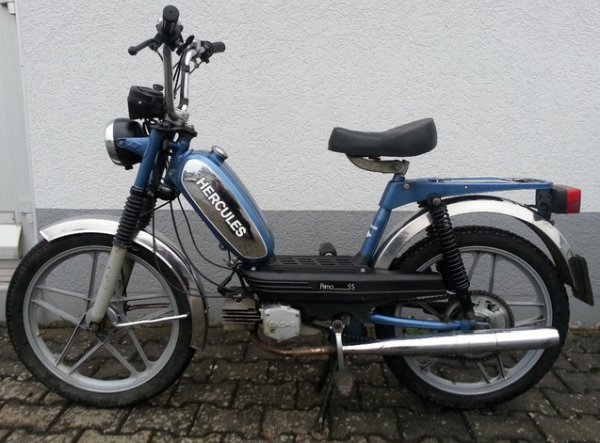
What is a classic moped?
The term moped comes from the Swedish words “motor” and “pedal,” referring to a small motor-driven bicycle that can also be pedaled. While in Europe mopeds were historically limited to specific speeds such as 15.5 mph (25 km/h), the situation in the United States is different and varies by state.
In general, a motorized bicycle or moped in the U.S. is defined as a small two- or three-wheeled vehicle with an engine typically 50cc or less, a top speed usually limited to around 30 mph (48 km/h), and automatic transmission in most modern models.
Exact definitions and legal classifications differ from state to state. For that reason, a vehicle that is legally treated as a moped in one state may be classified differently in another.
Legal classification in the United States
Unlike in European countries, there is no nationwide rule for mopeds in the United States. In many states, no motorcycle license is required, but a standard driver’s license may still be needed. Some states allow riding with only a learner’s permit, while others require a specific moped permit or endorsement.
Because of these differences, it is always necessary to check the local laws of the specific state before riding a moped or motorized bicycle on public roads.
The minimum age is typically somewhere between 14 and 16 years, depending on the state. In some states, mopeds must also be registered and insured, while other states have more limited requirements.
As a general orientation, many U.S. states classify a moped as a small, low-powered vehicle with an engine of about 50cc or less and a top speed of around 30 mph on level ground. However, this is not a universal definition. Some states also consider factors such as pedals, automatic transmission, brake horsepower, seat design, registration status, and whether the vehicle is gasoline-powered or electric.
For example, Florida defines mopeds differently from motorized scooters and motorcycles. California may treat a modified moped that can exceed 30 mph as a different vehicle class. New York uses the term “limited-use motorcycle” and separates vehicles into classes depending on top speed.
This means that riders should not rely only on the word “moped.” Before buying or riding one, it is important to check the current DMV or motor vehicle rules of the state where the vehicle will actually be operated. Important points include minimum age, license or permit requirements, registration, insurance, helmet rules, passenger rules, and whether the vehicle is allowed on certain roads.
Mopeds in modern traffic
In today’s fast and dense traffic, mopeds are often considered slow-moving vehicles, especially on roads with higher speed limits. Their low speed can make them less practical in urban environments with heavy traffic and less comfortable on roads where other vehicles are moving much faster.
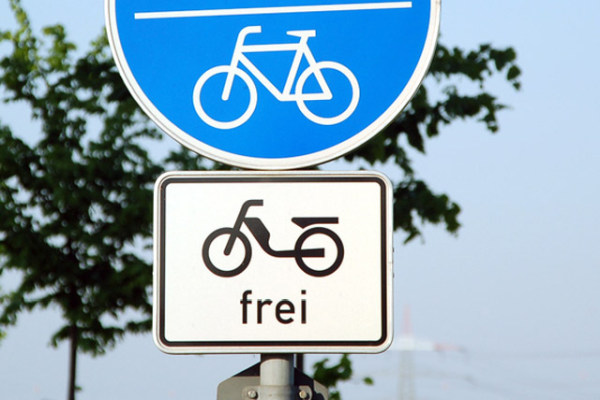
Mopeds are generally not allowed on highways. They usually have to stay on regular roads and are normally not allowed to use bicycle paths. In some areas, local regulations may allow limited use of bike lanes, but this is not a general national rule.
Technical characteristics
Most traditional mopeds in the United States were historically equipped with 2-stroke engines up to 50cc, simple mechanical construction, and automatic or semi-automatic transmissions. Modern mopeds and scooters are now mostly equipped with either 4-stroke gasoline engines or electric motors.
Older models sometimes still have pedals, but these are mostly symbolic today and are rarely used for actual propulsion. In earlier designs, pedals were often useful for starting the engine or assisting the vehicle at very low speed.
Moped vs. scooter vs. motorcycle
In the United States, terminology is less strict than in Europe. A moped or motorized bicycle usually means a small-engine, limited-speed vehicle. A scooter can range from a small 50cc vehicle to a much larger machine. A motorcycle is a more powerful vehicle and normally requires a motorcycle license or endorsement.
Moped tuning and modifications
Modifying mopeds to increase speed is also common in the United States, but it comes with significant risks. Many mopeds can be modified to exceed their designed speed, but their brakes, suspension, frame, tires, and overall construction are not built for high-speed riding.
This can lead to serious accidents. A small moped that was originally designed for around 30 mph may become unstable or unsafe when pushed far beyond its intended limits. Even if the engine can be made faster, the rest of the vehicle often cannot safely handle the additional speed.
There are also legal consequences. Modifications may make the vehicle illegal for road use, change its legal classification, or affect insurance coverage. For higher speeds, it is safer and legally more appropriate to use a properly designed motorcycle or scooter and obtain the required license or endorsement.
A detailed historical article on moped tuning was published by Thomas Soltau in Der Spiegel in 2008.
Electric mopeds and scooters
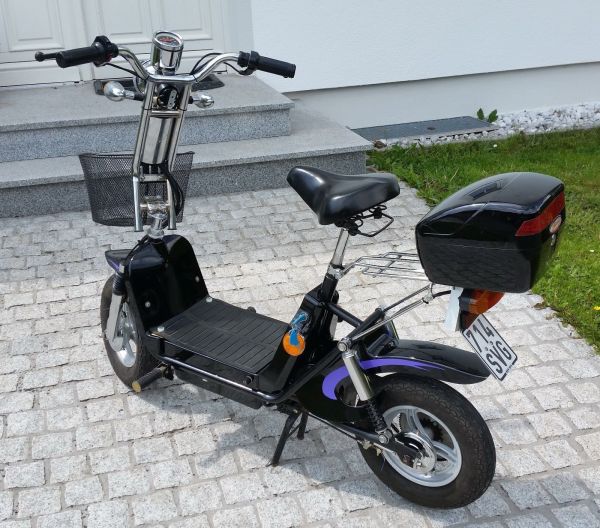
Electric mopeds and scooters are becoming increasingly popular in the United States. They are a modern alternative to small gasoline-powered vehicles and are especially useful for short urban trips, campus transportation, and local commuting.
The main advantages of electric drive are the lack of exhaust emissions, quiet operation, and lower maintenance compared with small gasoline engines. Electric motors have fewer moving parts, and there is no need for fuel mixing, oil changes in the same way as with gasoline engines, or carburetor adjustment.
The battery remains the main limitation. Many electric mopeds and scooters still have a limited range, often under 60 miles or 100 km per charge. Charging times can be long, and replacement batteries can be expensive. Battery weight also affects handling and total vehicle weight.
Technology is improving continuously, and electric motors can deliver strong performance when supplied with enough power. However, battery cost, charging infrastructure, range, and long-term battery life remain important factors for buyers.
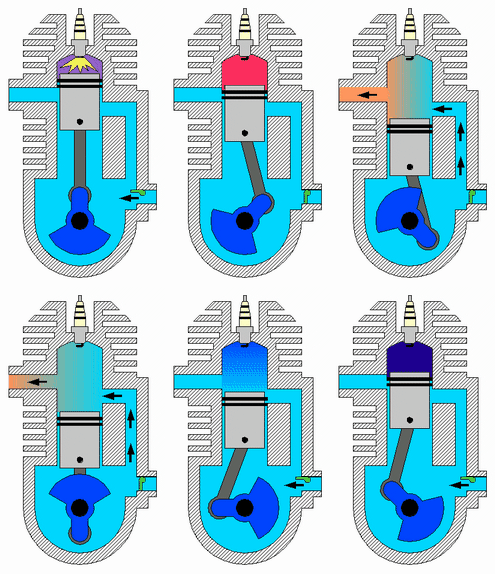
2-stroke vs. 4-stroke engines
In the United States, 2-stroke engines are not banned nationwide, but they have largely disappeared from new road-going mopeds and scooters because of emissions regulations and changing technology. Older 2-stroke vehicles may still be sold and used, depending on state law and local requirements.
Two-stroke engines are known for quick acceleration, simple design, and relatively easy repair. They respond quickly to the throttle and are often popular among hobby mechanics because they are mechanically simpler than 4-stroke engines.
Four-stroke engines are technically more complex, but they usually run more quietly, use less fuel, produce cleaner emissions, and are generally more reliable in everyday use. For that reason, modern gasoline-powered mopeds and small scooters are now mostly equipped with 4-stroke engines.
Today, buyers usually choose between a modern 4-stroke gasoline scooter and an electric moped or scooter. The best choice depends on local laws, riding distance, charging options, maintenance preferences, and whether the vehicle is used for short city trips or longer daily commuting.
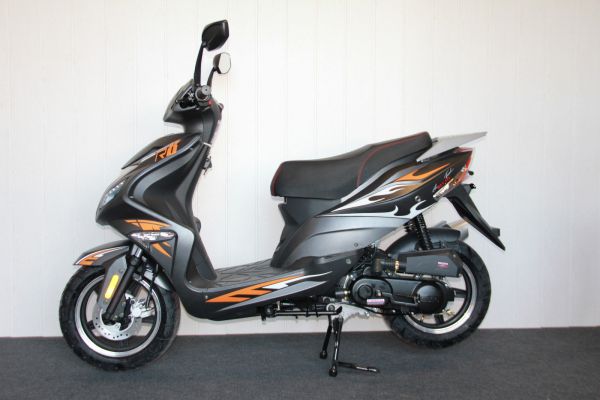
Motorized bicycles and mopeds still offer an affordable and simple form of mobility in the United States. However, unlike in Europe, regulations vary significantly between states.
While mopeds are practical for short distances, their low speed and limited safety features make them less suitable for high-speed traffic. Riders should always consider local laws, road conditions, licensing requirements, registration rules, insurance requirements, and basic safety aspects before using or modifying such vehicles.